


Calculate and Purchase ATV Insurance
Help with Personal Injury Claims
Sign up online
Personalized Service
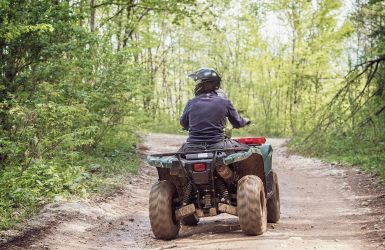
A quad is a special type of vehicle for which, just like a car, insurance is required. The basic coverage is liability insurance: the least expensive option, which only covers damage to others. If you choose more comprehensive coverage, damage caused by theft, fire, or a collision may also be covered. The more comprehensive the coverage, the higher the premium.
Your ATV Insurance Coverage
Third-Party Liability (Mandatory)
- Damage to others
- Theft and Fire Damage
- Damage to your own ATV

Third-Party Liability, Theft, and Fire
- Damage to others
- Theft and Fire Damage
- Damage to your own ATV
Third-Party Liability: Theft, Fire, and Collision
- Damage to others
- Theft and Fire Damage
- Damage to your own ATV
Clear, transparent, and honest advice for over 110 years
 customer testimonials

Civil Liability (WA)
Third-party liability insurance is required for anyone who owns a quad bike. This is the basic—and also the least expensive—type of quad bike insurance. This insurance covers damage you cause to others with your quad bike. This can range from minor property damage to injuries that result in high medical costs. Damage to your own quad bike is not covered.
Liability + Theft and Fire
In addition to the mandatory liability insurance, you can also opt for liability coverage plus theft and fire. This coverage goes beyond just damage you cause to others. You’re also insured against theft, attempted theft, joyriding, and damage caused by fire, short circuits, explosions, or lightning strikes. Damage to your own ATV that you caused yourself (for example, due to a collision) is not covered.
Third-Party Liability + Theft, Fire, and Collision
The Third-Party Liability + Theft, Fire, and Collision policy is the most comprehensive insurance for your quad. In addition to damage you cause to others, you’re also covered against theft (including joyriding or attempted theft), fire (including damage caused by lightning strikes or explosions), and damage to your own quad resulting from a collision or vandalism.
When should you choose which coverage?
It’s actually very simple. First, choose the most comprehensive ATV insurance plan. If you think the premium is too high compared to the value of your ATV, then opt for a plan with less coverage. That’s the advantage of comparing options: you’ll immediately receive quotes from multiple insurers. For example, you might be able to insure your ATV with one insurer for third-party liability plus theft, fire, and collision coverage for the same amount that another insurer would only cover for third-party liability plus theft and fire coverage.
Additional Coverage
Standard ATV insurance covers injuries to passengers only if there is a liable third party. Injuries to the driver are not covered. With supplemental passenger insurance, you’ll therefore be better protected.
In practice, passenger liability insurance offers the most comprehensive coverage, but the choice depends on your needs and budget. You can also get additional protection with legal expense insurance. This makes it easy to put together a policy that fits your situation.
You can expand your coverage with:
Passenger Accident Insurance
Passenger accident insurance pays a fixed amount in the event of death or permanent disability following an accident involving a quad bike. This applies to both the driver and passengers. The amounts vary by insurer. For example, €5,000 is paid out in the event of death and €22,500 in the event of permanent disability. This benefit is intended as a financial assistance, but does not cover all costs or loss of income. It is a relatively inexpensive insurance policy, but the coverage is limited.
Passenger Injury Insurance
Passenger injury insurance offers much broader coverage. Instead of a fixed amount, the actual damages are reimbursed. This includes loss of income due to inability to work or high medical expenses. Property damage, such as to clothing or luggage, is also covered under this insurance. Both the driver and the passengers can file a claim, even if the driver is at fault for the accident. The premium is higher than for passenger accident insurance, but the coverage is much more comprehensive.
Legal expenses insurance
Legal expense insurance provides legal assistance in the event of disputes, such as after an accident involving your ATV. The insurance covers the costs and handles communication with the other party, so you don’t have to deal with expensive lawyers or lengthy legal proceedings yourself. This can provide a great deal of peace of mind and security if you find yourself in a difficult dispute.
Compare and Purchase ATV Insurance
At Alpina, you can easily compare options online. Within minutes, you’ll see the cheapest options. Have you made your choice? Then you can purchase the insurance right away, and in most cases, you’ll be covered immediately. Here’s how it works:
Quad Insurance Policy Terms and Conditions
Policy terms and conditions are often long and difficult to read, but they are important. That's why we're highlighting the key points for you.
Own risk
The deductible is the portion of the claim that you pay yourself. Not all insurers charge a deductible, but when they do, it’s often up to €150. So, for a claim of €1,000 with a deductible of €150, the insurer will pay out €850.
Younger drivers (up to age 24) often pay a higher premium. In addition, the policy may specify an additional deductible for claims caused by young drivers.
Separate rules apply to windshield damage. If the windshield is repaired, you often don’t have to pay a deductible, but if it’s replaced, you usually do. Insurers often work with designated repair shops.
Term and Cancellation
Quad insurance typically has a one-year term and is automatically renewed for one year at a time. After the first year, the policy can usually be canceled at any time, though sometimes with a one-month notice period. If you sell your quad, you can always cancel the policy immediately, even during the first year.
Coverage and Exclusions
Insurance companies often refer repair work to affiliated repair shops. If you choose one of these shops, your deductible may be lower.
Insurance companies take a strict stance on accidents caused while under the influence of alcohol. While the other party’s damages will be covered, the insurer may then seek full reimbursement from you. This can involve large sums of money.
In addition, there are situations in which the insurance provides no coverage at all, such as when participating in speed races, renting out the ATV, or driving without a valid driver’s license. Please read all exclusions in the policy terms and conditions.
Security Deposits Abroad
If you’re involved in a collision abroad, you may be required to pay a security deposit—for example, to secure the release of your ATV or yourself. The insurer will advance this security deposit.
Practical Tips for Safe Driving
ATVs are powerful vehicles and require experience to ride safely. Inexperienced riders often underestimate their speed and power. These tips will help you reduce the risk of accidents:
1. Wear a helmet, even if it's not required.
2. Take your time getting familiar with the ATV before you start riding it aggressively.
3. Don't take turns too fast; this will prevent skidding and tipping over.
4. Wear protective clothing, preferably motorcycle gear.
5. Carry a passenger only if the vehicle is designed to do so.
Frequently Asked Questions About ATV Insurance
What is a quad?
A quad is a four-wheeled motorcycle or moped and is therefore classified as a motor vehicle. Depending on its maximum speed, weight, and power, a quad may be classified by law as a moped, a three-wheeled motor vehicle, or a passenger car.
Are you allowed to ride a quad bike on public roads?
There are five different types of ATVs. First, there is the ATV that is not approved for use on public roads. This type can be used, for example, for riding on private property. In addition, there are four types that are permitted on public roads. The requirements for these vary by type. There is a special ATV insurance policy for these vehicles. The remaining four types fall under the following categories:
- Approved as a moped
- Approved as a three-wheeled motor vehicle
- Use the heavier version as a passenger car
- The heavier version as a company car
The legal requirements depend on the type of motor vehicle with which the quad is classified.
Which category does my ATV fall under?
The term “quad” is a broad one. A quad may be registered as a moped, but sometimes also as a motorcycle or even as a passenger car. The type of driver’s license you need depends on the classification associated with the license plate. This classification also determines what type of insurance you need.
You can find this information on your vehicle registration card. Don't have it on hand? You can also look it up on the RDW website.
You don’t have to search for insurance on your own. On Alpina.nl, simply enter the requested information and you’ll immediately see which insurance policy best suits your quad. Is your quad registered as a moped? If so, you can base your comparison on a moped or scooter.
What do you need to know to insure your ATV?
When you take out insurance, you’ll be asked questions about the primary driver and the ATV itself. You can easily answer these questions using your registration card. The information usually requested includes the following:
- License plate
- Year built
- Weight
- Cylinder capacity
- Power in kW
How much does ATV insurance cost?
The cost ofyour ATV insurance premiumdepends on several factors, such as:
- The coverage you choose
- The weight of the ATV
- The number of claim-free years
- The age of the youngest driver
- Your ZIP code
Based on these factors, the premium is determined, and you'll know exactly how much insurance for your ATV costs.
What determines the amount of the premium?
To determine the cost of your ATV ortrike insurance, our system takes several factors into account:
- Which coverage should you choose? Third-party liability plus theft, fire, and collision coverage is more expensive than third-party liability coverage alone.
- How much does your ATV or trike weigh? A heavier ATV can cause more damage than a lighter one.
- How many claim-free years do you have? The more claim-free years you've accumulated, the lower your costs will be.
- How old are you? Younger drivers often pay more than older drivers because, on average, they are involved in more accidents.
- Where do you live? If you live in a busy city, there may be more accidents, and you'll pay a higher premium.
Based on these factors, the insurance company calculates the cost of your ATV insurance.
Does the CC affect the cost of my ATV insurance?
When calculating your premium, insurers primarily consider factors such as your age, place of residence, and the weight and value of the ATV. You’ll often be asked to enter the engine displacement (CC) when taking out a policy, but this usually doesn’t affect the amount of your premium. The weight of the ATV does play a role, however, because a heavier ATV can cause more damage.
What does CC actually mean?
CC stands for cubic centimeter and indicates the engine's displacement. Generally, the larger the cylinders, the more power the ATV has.
Examples of quads with different CCs
- 700 CC: Powerful and often expensive ATVs, such as the Yamaha Raptor. These are usually classified as passenger or commercial vehicles. In that case, having good insurance is especially important.
- 400 CC: Commonly available ATVs. You can choose from third-party liability, third-party liability + theft and fire, or comprehensive coverage (third-party liability + theft, fire, and collision).
- 350 or 250 CC: These are often agricultural ATVs. If they are not driven on public roads, a license plate and insurance are usually not required. Always check this with the RDW.
As an 18-year-old, can I get insurance for a quad bike?
Yes, that’s possible. For every motor vehicle—including a quad—you’re required to have at least third-party liability insurance. As mentioned above, insurance is more expensive for young drivers (up to age 24), and that also applies to 18-year-olds. Some insurers also charge an additional deductible.
Still want to save money? Choose the coverage that matches the value of your ATV. For a new or expensive ATV, comprehensive coverage (Liability + Theft, Fire, and Collision) is often a wise choice. If you have an older or less expensive ATV, more limited coverage may be sufficient, and you’ll pay a lower premium.
We'd be happy to help you right away
Having trouble figuring it out online? We're happy to help you via chat or WhatsApp.
We are open Monday through Friday from 8:00 a.m. to 6:00 p.m.