


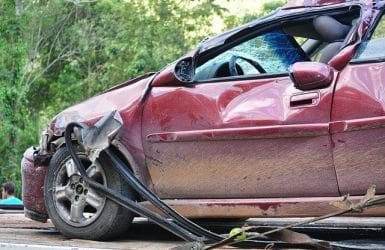
Passenger Accident Insurance: What Exactly Does It Cover?
Passenger accident insuranceis a supplemental policy you can add to yourauto insurance. With passenger accident insurance, not only are you covered, but any passengers are as well. Suppose you’re driving with a passenger and are involved in a serious accident.
If one of you becomes permanently disabled or, in the worst case, dies, passenger accident insurance will pay a fixed amount to the affected person or their surviving relatives. You agree on the amount of this benefit when you take out the policy.
Of course, you hope you’ll never need it, but it may be wise to purchase passenger accident insurance. If something were to happen to you or a passenger, you can be sure you’ll receive compensation right away. You won’t have to wait long, because with this type of insurance, it doesn’t matter who is at fault for the accident. Even in an accident where there is no party at fault—for example, a collision with an animal—the insurer will pay out the compensation.
What does passenger accident insurance cover?
Passenger passenger accident insurance pays out fixed amounts in the event of the death or permanent disability of the driver and/or passengers. The amounts are agreed upon in advance in the policy, and there is no correlation between the amount paid out and the actual damages incurred. Coverage applies when the occupants are inside the vehicle, but also, for example, while getting in and out of the vehicle or while performing emergency repairs along the way. Property damage is not covered by passenger accident insurance. For this, you can purchase property damage insurance for passengers.

Is the payment independent of the question of liability?
With passenger accident insurance, it doesn’t matter who is at fault for the accident. If one of the passengers dies or becomes permanently disabled, a benefit is paid out. This is particularly desirable when the other party cannot be identified. If you have not purchased this coverage and the other party is unknown, you will not receive a benefit even if the other party is at fault.
If the driver is at fault for the accident, the passengers still have the option of holding the vehicle’s liability insurance liable and seeking compensation for any damages. However, if it is unclear who is at fault, this can be a lengthy process—one that can be avoided by purchasing passenger accident insurance.
Explanation of Passenger Accident Insurance (OI)
Suppose you, as the driver of a car, are involved in an accident.
The passengers in the car are left permanently disabled. Or they may even die.
Coverage:
Passenger accident insurance pays a fixed amount (specified in the policy) to the passenger(s) or their surviving relatives following an accident:
- In the event of death, the amount specified in the policy (a fixed, pre-agreed amount) will be paid out in full.
- If the insured becomes totally disabled, the amount specified in the policy will be paid out in full.
- In the event of partial disability, the insurer pays out a percentage (determined by an expert based on the Gliedertaxe)
- In and around the vehicle: Insurance coverage applies when passengers are inside the car, as well as when getting in and out of the car, and, for example, while performing an emergency repair on the road. The policy terms and conditions specify exactly what is covered.
- The driver is also insured!
- The insurer does not consider the exact amount of damage a person suffers; therefore, there is no correlation between the amount paid out and the actual damage suffered.
- For passenger accident insurance, the number of seats listed is important.
- It doesn't matter whether the driver is liable for the accident.
Not covered:
- If the driver does not have a valid driver's license;
- If the driver was under the influence of (too much) alcohol or drugs;
- If the participant took part in a race or other speed event;
- If a private car was used as a taxi;
- For psychological injury
If there are more passengers in the vehicle than are insured, the underinsurance rule applies: the number of insured seats divided by the number of passengers, multiplied by the insured amount.
What Is the Gliedertaxe?
The Gliedertaxe is a table included in the policy of an occupant accident insurance policy. This table lists the senses and body parts. A doctor or specialist assigns a percentage to each entry. This percentage indicates the extent to which the person is permanently disabled (with respect to that specific body part).
What is the difference between passenger accident insurance and passenger liability insurance?
In addition to passenger accident insurance, you can also purchase passenger liability insurance. Although these two types of insurance may seem similar, they are in fact quite different and can be purchased to complement one another.
Passenger accident insuranceis a fixed-sum insurance policy. A fixed-sum insurance policy means that the payout is based on predetermined amounts. If a passenger in a car becomes permanently disabled or dies as a result of an accident, a benefit is paid out. This is a predetermined amount; the insurance does not cover the full extent of the damages.
Passenger property damage insuranceis a type of property insurance. This insurance covers the actual damages incurred, not just a fixed amount. As with passenger accident insurance, the insurer pays out regardless of who is at fault for the accident. Click here for a detailed comparison of the differences betweenpassenger property damage insurance and passenger accident insurance.
Never Underinsured
Create Your Own Package
A wide selection
We compare all insurance companies for you, saving you time
Help from our experts
Can't figure it out? Our experts are always ready to help you
We'd be happy to help you right away
Having trouble figuring it out online? We're happy to help you via chat or WhatsApp.
We are open Monday through Friday from 8:00 a.m. to 6:00 p.m.