


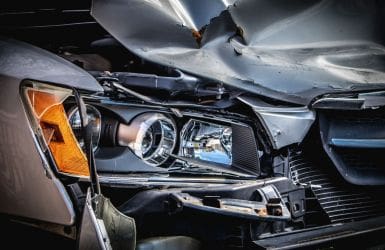
What happens with insurance in the event of a collision?
If you're in a car accident, there are a few things you need to take care of right away regarding your auto insurance. Below is a complete overview of the steps you need to take to file a claim, as well as information about your coverage.
One-sided and two-sided damage
It can happen to anyone: you hit a pole or collide with another vehicle. There are two types of damage:

Damage on one side only:
if only your vehicle is involved (for example, a pole or a tree).
Mutual damage:
if another road user is involved.
In cases of damage involving both parties, the question of fault comes into play. If you cause the damage, the other party can hold you liable. That is why liability insurance is required: it covers damages to others.
Coverage in the Event of Damage
Damage to Another Person's Property
Every car owner in the Netherlands is required to have at least third-party auto insurance. WA stands for “wettelijke aansprakelijkheid” (third-party liability). With third-party insurance, you’re covered for damage for which you’re liable. This is the most basic and least expensive type of auto insurance.
Damage to Your Own Car
Damage to your own car is not covered by third-party liability auto insurance. If you also want to insure damage to your own car, you can choose limited comprehensive or full comprehensive auto insurance. The best coverage for you depends on a number of factors. The current market value of your car, the monthly premium, how much you rely on your car, and the number of claim-free years you’ve accumulated are important factors to consider when choosing a policy.
Car Insurance Coverage
Third-Party Liability (Mandatory)
- Damage to others
- Theft, joyriding, and missing persons
- Window damage
- Damage caused by fire or natural disasters
- Damage to one's own vehicle caused by a collision

Limited casco
- Damage to others
- Theft, joyriding, and missing persons
- Window damage
- Damage caused by fire or natural disasters
- Damage to one's own vehicle caused by a collision
All Risk (Liability + Comprehensive)
- Damage to others
- Theft, joyriding, and missing persons
- Window damage
- Damage caused by fire or natural disasters
- Damage to one's own vehicle caused by a collision
Step-by-Step Guide After a Car Accident
1
Get everyone to safety
Call the police or an ambulance if there are injuries or serious damage. If possible, pull your car over to a safe spot. Never stop on the emergency shoulder; instead, stop behind the guardrail or on the shoulder.
2
Call emergency services or the emergency dispatch center
If necessary, call the emergency dispatch center (the number is on the green card).
3
Fill out the accident report form
Next, you’ll need to fill out the accident report form. In the case of a single-vehicle accident, the question of fault is irrelevant. If it’s a two-vehicle accident involving another vehicle, both drivers must fill out the accident report form. The accident report form is often required by the insurance company to process the claim.
Always fill it out together to avoid misunderstandings. Be vigilant and document everything carefully. Make sure both the front and back are filled out completely. Don’t just sign it blindly: if you disagree, use the “My Comments” box and sign only after you’ve added your input. The insurer also uses the form to assess whether the damage can be recovered from the party at fault.
4
Gather evidence
Take photos of the scene and see if you can find any witnesses who can give a statement.
5
Contact your insurance provider
Discuss the next steps and keep your green card handy.
6
Have your car towed if necessary
If your car needs to be towed, contact the emergency call center. If your car is severely damaged and cannot be repaired on the spot, roadside assistance will tow it to a storage location. This is often a repair shop. Check to see if this is covered under your policy.
Reporting a Claim to the Insurance Company
If you suffer damage, it’s important to always report it to your insurer. Your insurer will determine whether you’re entitled to compensation. If you don’t have comprehensive coverage and the other party is unknown, you may be able to file a claim with the Guarantee Fund under certain conditions. If your situation meets the requirements, you can still have the damage repaired. We’re happy to help you file a claim.
Compensation for Damages Following a Collision
If you are the victim of a collision, you are entitled to compensation: both for property damage (such as your car and personal belongings) and for non-property damage (compensation for pain and suffering).
The amount of the reimbursement depends on the costs you incurred. Generally, 50% to 100% of the damages are reimbursed. If you are not at fault, the full amount of the damages will be reimbursed. This may also include medical expenses and loss of income.
Help with Personal Injury Claims
Have you suffered personal injury, such as physical injury or loss of income? If so, we can assist you. We work with specialized partners who will help you seek compensation, including compensation for pain and suffering and lost income.
Loss of no-claims years in the event of liability-based damage
For every year that you don’t file a claim on your auto insurance, you earn 1 claim-free year. The more claim-free years you have, the bigger the discount you’ll receive on your auto insurance premium. If you file a claim for at-fault damage, you’ll lose 5 claim-free years. At-fault damage means that if you accidentally collide with another car, you’re deemed to be at fault. As a result, the other party’s damages will be claimed from your auto insurance. For every claim filed, you’ll lose 5 claim-free years, regardless of the amount of the claim.
Related pages about auto damage
Never Underinsured
Create Your Own Package
A wide selection
We compare all insurance companies for you, saving you time
Help from our experts
Can't figure it out? Our experts are always ready to help you
We'd be happy to help you right away
Having trouble figuring it out online? We're happy to help you via chat or WhatsApp.
We are open Monday through Friday from 8:00 a.m. to 6:00 p.m.